Showing posts with label Purepecha. Show all posts

Monday, November 15, 2010

Pátzcuaro is Special

An inveterate traveler posted this on a message board that I happened upon:

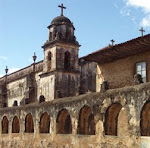
clip_image002Typical architecture in Patzcuaro. All buildings must be painted white with with dark red bases. The lettering must all be of the same style and painted red, black and white. All of the lanterns lining the streets are identical.

To me, Patzcuaro is a VERY SPECIAL, enchanting place. When you enter the city, you can imagine that you’ve gone back 200 years in time. Of course, there are automobiles, electricity, and other modern conveniences, but the basic aura of the city is timeless. It exudes feelings of a simpler time when people spent time together and engaged in ages old occupations ~ farming, fishing, weaving, and hand-crafting items for use in every day life. I’ve NEVER seen any city that has a bulk SEED STORE located on their main plaza. Apparently it’s been there forever and ever, and has been run by the same man for generations. In Patzcuaro, you still see MANY Tarascan people in their traditional clothing out and about.

Patzcuaro is a place we WILL return to ~ hopefully over and over again…

Post by JoanieBlon of maison-t-bayou.com/ to www.zihuatanejo-ixtapa.com.mx/wwwboard/messages/181505.html

A place in Patzcuaro for you.

Thursday, October 14, 2010

Noche de Muertos - #6

Altars & Offerings Exhibit
Opening 1 November 2010 at 5:00 PM
Biblioteca Gertrudis Bocanegra
Plaza “Chica”, Pátzcuaro
Traditional pozole and atole will be served.

See the altars and offerings for Night of the Dead that are traditional in the Lake Pátzcuaro region.

This year the library will display altars to pay homage to two heroines of the Mexican Revolution: María Gertrudis Bocanegra de Mendoza de Lazo de la Vega of Pátzcuaro and María Luísa Martínez of Erongarícuaro.

The offerings will be in memory of Dr. Aaron Huipe of Pátzcuaro. This young physician died prematurely this past year; he had received many awards for excellence when he was a medical student.

For more about Altars & Offerings.
Your Pátzcuaro.

Wednesday, October 13, 2010

Noche de Muertos - #5

Exhibit and Sale of Ceramic Catrina Figures
Biblioteca Gertudris Bocanegra
Plaza “Chica”, Pátzcuaro
Formal opening of exhibit – 30 October 2010 at 5:00 PM
On display through 3 November 2010.

patz 014

Catrinas are skeleton figures, dressed in outrageous clothing and costume, with which Mexico mocks death. For further explanation see  "Catrinas" and Skeletons: Mocking Death in Mexican Culture.

patz 017

This exhibit will feature hand-selected Catrina pieces from Capula. There will be something “for every pocket”, as one says in Spanish. Prices will range from approximately Pesos $100 to $500.

More about Night of the Dead around Lake Pátzcuaro.
You could walk to Plaza Chica.

Monday, October 11, 2010

Noche de Muertos 2010 - #4

Videos - Noche de Muertos in the Lake Pátzcuaro Region

1. An interesting video of Noche de Muertos Traditions on La Pacanda island of Lake Pátzcuaro.

2. A video of the Purhépecha fire ball game - Uarhukua Chanakua

More about Night of the Dead around Lake Pátzcuaro.
Pátzcuaro living.

Wednesday, October 6, 2010

Noche de Muertos 2010 - #3

Flor de Ánimas

Yunuen 116

Flower of Souls
Flor de Ánimas, Yunuén Island
Laelia autumnalis

All over Mexico the ubiquitous zempasúchitl flower(marigold) marks the observance of death. On the Meseta Purhépecha, the high Purhépecha Plateau, in addition to the marigold, a flower less well known is important and traditionally used for celebration of Night of the Dead. This is the delicate purple orchid, endemic to Mexico’s central highlands, called Flor de Ánimas (Flower of Souls). This orchid blooms abundantly in the fall in high oak forests. I have seen these blossoms in profusion on the nearby island of Yunuén on Lake Pátzcuaro.

The Orchidaceae epidendroideae epidendreae laeliinae laelia autumnalis grows in Mexico in the central to southern mountains at elevations of 1500 to 2600 meters. The blooms are fragrant and long-lasting. The bulbs of this orchid is one type of those traditionally used to make a paste mixed with cornstarch to mold figures such as that of the Virgen de la Salud in Pátzcuaro’s Basílica. Some medical research indicates that an extract of this orchid has antihypertensive and vasorelaxant properties; it is also said to cause abortion.

If you are an orquidophile, visit Artesanías La Mojiganga on Patzcuaro’s Plaza Vasco de Quiroga. The owner, Felipe de Ortega, helped me indentify the exact species and scientific name of the Flor de Ánimas. He has many types of orchid plants and items necessary to cultivate orchids.

The myriad orchid plants that Glen has put in the trees in our garden at La Jacaranda are busy pushing out the long, thin shoots that will bear the Flor de Ánimas. And soon we will see vendors offering long stems of these orchid blooms in the streets around the central plazas of Pátzcuaro. These and the street full of flowers that is set up next to the Plaza de la Basílica will herald the individual altars and the decorations in homes that are traditional for Night of the Dead.

Hasta más.

P.S. October 12th - Flor de Ánimas blossoms opened today on two of our plants in the trees at La Jacaranda. What a pleasure.

Links:
Mexican Association of Orchidology http://amo.com.mx/
More about Night of the Dead around Lake Pátzcuaro.
Photos on Flickr of
The Flowers.
Why not live in Patzcuaro?

Tuesday, October 5, 2010

Noche de Muertos 2010 - #2

Night of the Dead Tour - Pesos $470 per person
November 1st, 7:45 PM
Depart from Plazuela San Francisco, Pátzcuaro

Look for the Animecha Tours sign.

Note: Tickets for commentary in English were immediately sold out. Tickets are available for commentary in Spanish.

patz 011 - Copy

Kuperantzcua Tzan Animecha
Encounter with the Souls

Tickets available at the Biblioteca Federal Pública Gertrudis Bocanegra on the Plaza “Chica” in Pátzcuaro
M – F 9:00 AM to 7:00 PM
Sat. 9:30 AM to 1:30 PM
Sun. Closed

If you purchase your tickets at the Biblioteca, a portion of the proceeds will be donated to the library.

Ticket includes:

  • Transportation
  • Charanda (sample regional tequila during the tour)
  • Tócuaro - private performance of the Pastorela/Dance of the Shepherds in the mask-maker town of Tócuaro; display of masks.
  • Regional Food Buffet with mole, enchiladas, tamales, atole, ponche...
  • Jarácuaro – Purhépecha festival to welcome the souls with music, dances and more.
  • Graveside vigil in Arocutín cemetery
  • Graveside vigil in Cucuchucho cemetery
  • Bi-lingual English/Spanish tour guide Jaime Hernandez Balderas (sold out – Spanish only available)
  • Souvenir

Make sure you have warm clothing and comfortable walking shoes.

More about Night of the Dead around Lake Pátzcuaro.
Photos on Flickr of
The Flowers.
Photos on Flickr of
The Cemeteries.
Why not live in Patzcuaro?

Thursday, September 30, 2010

Noche de Muertos 2010 - #1

More coming soon on Noche de Muertos...watch this site.


Everywhere around Lake Pátzcuaro fields of zempasúchitl, a species of bright orange marigold, are being cultivated for Night of the Dead. Take particular note of the usage "Night" of the Dead. The rest of Mexico observes Day of the Dead and many mexicanos come to Pátzcuaro to observe the unique customs of the Purhépecha pueblos around the lake. In fact, some 95% of Pátzcuaro visitors year-round are mexicanos, which makes for a very traditional ambiance.

Common both to the town of Pátzcuaro and to the pueblos are flowers, decorations and bedizened altars during the week that precedes Noche de Muertos. However, the vigil in the cemetery of Pátzcuaro proper is held during the day, as in the rest of Mexico, while the singular vigil in the lake pueblos is held at night.

More about Night of the Dead around Lake Pátzcuaro.

Photos on Flickr of The Flowers.

Photos on Flickr of The Cemeteries.

Why not live in Patzcuaro?

Sunday, April 18, 2010

Paricutin

With our cousins we went to visit Paricutín, where between 1943 and 1952 the lava from the volcano buried two villages. (Reference links for information in English and en français are given below). We decided that to cram seven people into the Nissan to travel on the autopista would be uncomfortable and unsafe. We hired Nacho Vega of Patzcuaro to take us out for the day by van. It was a luxury and we had fun. Nacho is both reliable and nice.
We walked from Angauan through pine-oak forest to see the buried village, where the top of the church spikes up through the jagged lava rock.
Angauan is a very Purhépecha town. The women and girls wear colorful dress. They flee cameras that come anywhere near, but this was taken with a good telephoto lens.


After clambering around buried Paricutín we went to the trout restaurant just across the callejón from Mansión del Cupatitzio at Parque Eduardo Ruiz in Uruapan. The trout are raised in fresh water from the spring just a few hundred meters away. They are fresh and delicious. The restaurant overlooks the verdant park--I recommend it.
Paricutin in English.
Paricutin en français.
Patzcuaro.

Thursday, April 15, 2010

Yunuén via Ucazanástacua

The last time Glen and I went to Yunuén, we were ferried in a canoe, a little bigger than the one pictured here.

For this visit there were seven of us, so we got the Big Boat Treatment. We told our cousins that they could not return to France until they could say they had gone to "Yunuén via Ucazanástacua".

Approaching Yunuén. (There had been a lot of rain, so the lake waters were muddy.)


We walked around the island, and stopped here for a cool drink. This was definitely not a commercial venue. There are only five resident Purhépecha families, all related, and we saw one lone visitor other than ourselves. It was a big day for visitors! Yunuén is a tranquil place and represents traditional life on one of the small islands of Lake Pátzcuaro. Orchids and egrets abound.