Showing posts with label Purhepecha. Show all posts

Monday, November 15, 2010

Pátzcuaro is Special

An inveterate traveler posted this on a message board that I happened upon:

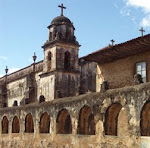
clip_image002Typical architecture in Patzcuaro. All buildings must be painted white with with dark red bases. The lettering must all be of the same style and painted red, black and white. All of the lanterns lining the streets are identical.

To me, Patzcuaro is a VERY SPECIAL, enchanting place. When you enter the city, you can imagine that you’ve gone back 200 years in time. Of course, there are automobiles, electricity, and other modern conveniences, but the basic aura of the city is timeless. It exudes feelings of a simpler time when people spent time together and engaged in ages old occupations ~ farming, fishing, weaving, and hand-crafting items for use in every day life. I’ve NEVER seen any city that has a bulk SEED STORE located on their main plaza. Apparently it’s been there forever and ever, and has been run by the same man for generations. In Patzcuaro, you still see MANY Tarascan people in their traditional clothing out and about.

Patzcuaro is a place we WILL return to ~ hopefully over and over again…

Post by JoanieBlon of maison-t-bayou.com/ to www.zihuatanejo-ixtapa.com.mx/wwwboard/messages/181505.html

A place in Patzcuaro for you.

Thursday, October 14, 2010

Noche de Muertos - #6

Altars & Offerings Exhibit
Opening 1 November 2010 at 5:00 PM
Biblioteca Gertrudis Bocanegra
Plaza “Chica”, Pátzcuaro
Traditional pozole and atole will be served.

See the altars and offerings for Night of the Dead that are traditional in the Lake Pátzcuaro region.

This year the library will display altars to pay homage to two heroines of the Mexican Revolution: María Gertrudis Bocanegra de Mendoza de Lazo de la Vega of Pátzcuaro and María Luísa Martínez of Erongarícuaro.

The offerings will be in memory of Dr. Aaron Huipe of Pátzcuaro. This young physician died prematurely this past year; he had received many awards for excellence when he was a medical student.

For more about Altars & Offerings.
Your Pátzcuaro.

Wednesday, October 13, 2010

Noche de Muertos - #5

Exhibit and Sale of Ceramic Catrina Figures
Biblioteca Gertudris Bocanegra
Plaza “Chica”, Pátzcuaro
Formal opening of exhibit – 30 October 2010 at 5:00 PM
On display through 3 November 2010.

patz 014

Catrinas are skeleton figures, dressed in outrageous clothing and costume, with which Mexico mocks death. For further explanation see  "Catrinas" and Skeletons: Mocking Death in Mexican Culture.

patz 017

This exhibit will feature hand-selected Catrina pieces from Capula. There will be something “for every pocket”, as one says in Spanish. Prices will range from approximately Pesos $100 to $500.

More about Night of the Dead around Lake Pátzcuaro.
You could walk to Plaza Chica.

Monday, October 11, 2010

Noche de Muertos 2010 - #4

Videos - Noche de Muertos in the Lake Pátzcuaro Region

1. An interesting video of Noche de Muertos Traditions on La Pacanda island of Lake Pátzcuaro.

2. A video of the Purhépecha fire ball game - Uarhukua Chanakua

More about Night of the Dead around Lake Pátzcuaro.
Pátzcuaro living.

Wednesday, October 6, 2010

Noche de Muertos 2010 - #3

Flor de Ánimas

Yunuen 116

Flower of Souls
Flor de Ánimas, Yunuén Island
Laelia autumnalis

All over Mexico the ubiquitous zempasúchitl flower(marigold) marks the observance of death. On the Meseta Purhépecha, the high Purhépecha Plateau, in addition to the marigold, a flower less well known is important and traditionally used for celebration of Night of the Dead. This is the delicate purple orchid, endemic to Mexico’s central highlands, called Flor de Ánimas (Flower of Souls). This orchid blooms abundantly in the fall in high oak forests. I have seen these blossoms in profusion on the nearby island of Yunuén on Lake Pátzcuaro.

The Orchidaceae epidendroideae epidendreae laeliinae laelia autumnalis grows in Mexico in the central to southern mountains at elevations of 1500 to 2600 meters. The blooms are fragrant and long-lasting. The bulbs of this orchid is one type of those traditionally used to make a paste mixed with cornstarch to mold figures such as that of the Virgen de la Salud in Pátzcuaro’s Basílica. Some medical research indicates that an extract of this orchid has antihypertensive and vasorelaxant properties; it is also said to cause abortion.

If you are an orquidophile, visit Artesanías La Mojiganga on Patzcuaro’s Plaza Vasco de Quiroga. The owner, Felipe de Ortega, helped me indentify the exact species and scientific name of the Flor de Ánimas. He has many types of orchid plants and items necessary to cultivate orchids.

The myriad orchid plants that Glen has put in the trees in our garden at La Jacaranda are busy pushing out the long, thin shoots that will bear the Flor de Ánimas. And soon we will see vendors offering long stems of these orchid blooms in the streets around the central plazas of Pátzcuaro. These and the street full of flowers that is set up next to the Plaza de la Basílica will herald the individual altars and the decorations in homes that are traditional for Night of the Dead.

Hasta más.

P.S. October 12th - Flor de Ánimas blossoms opened today on two of our plants in the trees at La Jacaranda. What a pleasure.

Links:
Mexican Association of Orchidology http://amo.com.mx/
More about Night of the Dead around Lake Pátzcuaro.
Photos on Flickr of
The Flowers.
Why not live in Patzcuaro?

Tuesday, October 5, 2010

Noche de Muertos 2010 - #2

Night of the Dead Tour - Pesos $470 per person
November 1st, 7:45 PM
Depart from Plazuela San Francisco, Pátzcuaro

Look for the Animecha Tours sign.

Note: Tickets for commentary in English were immediately sold out. Tickets are available for commentary in Spanish.

patz 011 - Copy

Kuperantzcua Tzan Animecha
Encounter with the Souls

Tickets available at the Biblioteca Federal Pública Gertrudis Bocanegra on the Plaza “Chica” in Pátzcuaro
M – F 9:00 AM to 7:00 PM
Sat. 9:30 AM to 1:30 PM
Sun. Closed

If you purchase your tickets at the Biblioteca, a portion of the proceeds will be donated to the library.

Ticket includes:

  • Transportation
  • Charanda (sample regional tequila during the tour)
  • Tócuaro - private performance of the Pastorela/Dance of the Shepherds in the mask-maker town of Tócuaro; display of masks.
  • Regional Food Buffet with mole, enchiladas, tamales, atole, ponche...
  • Jarácuaro – Purhépecha festival to welcome the souls with music, dances and more.
  • Graveside vigil in Arocutín cemetery
  • Graveside vigil in Cucuchucho cemetery
  • Bi-lingual English/Spanish tour guide Jaime Hernandez Balderas (sold out – Spanish only available)
  • Souvenir

Make sure you have warm clothing and comfortable walking shoes.

More about Night of the Dead around Lake Pátzcuaro.
Photos on Flickr of
The Flowers.
Photos on Flickr of
The Cemeteries.
Why not live in Patzcuaro?

Thursday, September 30, 2010

Noche de Muertos 2010 - #1

More coming soon on Noche de Muertos...watch this site.


Everywhere around Lake Pátzcuaro fields of zempasúchitl, a species of bright orange marigold, are being cultivated for Night of the Dead. Take particular note of the usage "Night" of the Dead. The rest of Mexico observes Day of the Dead and many mexicanos come to Pátzcuaro to observe the unique customs of the Purhépecha pueblos around the lake. In fact, some 95% of Pátzcuaro visitors year-round are mexicanos, which makes for a very traditional ambiance.

Common both to the town of Pátzcuaro and to the pueblos are flowers, decorations and bedizened altars during the week that precedes Noche de Muertos. However, the vigil in the cemetery of Pátzcuaro proper is held during the day, as in the rest of Mexico, while the singular vigil in the lake pueblos is held at night.

More about Night of the Dead around Lake Pátzcuaro.

Photos on Flickr of The Flowers.

Photos on Flickr of The Cemeteries.

Why not live in Patzcuaro?

Sunday, April 18, 2010

Paricutin

With our cousins we went to visit Paricutín, where between 1943 and 1952 the lava from the volcano buried two villages. (Reference links for information in English and en français are given below). We decided that to cram seven people into the Nissan to travel on the autopista would be uncomfortable and unsafe. We hired Nacho Vega of Patzcuaro to take us out for the day by van. It was a luxury and we had fun. Nacho is both reliable and nice.
We walked from Angauan through pine-oak forest to see the buried village, where the top of the church spikes up through the jagged lava rock.
Angauan is a very Purhépecha town. The women and girls wear colorful dress. They flee cameras that come anywhere near, but this was taken with a good telephoto lens.


After clambering around buried Paricutín we went to the trout restaurant just across the callejón from Mansión del Cupatitzio at Parque Eduardo Ruiz in Uruapan. The trout are raised in fresh water from the spring just a few hundred meters away. They are fresh and delicious. The restaurant overlooks the verdant park--I recommend it.
Paricutin in English.
Paricutin en français.
Patzcuaro.

Thursday, April 15, 2010

Yunuén via Ucazanástacua

The last time Glen and I went to Yunuén, we were ferried in a canoe, a little bigger than the one pictured here.

For this visit there were seven of us, so we got the Big Boat Treatment. We told our cousins that they could not return to France until they could say they had gone to "Yunuén via Ucazanástacua".

Approaching Yunuén. (There had been a lot of rain, so the lake waters were muddy.)


We walked around the island, and stopped here for a cool drink. This was definitely not a commercial venue. There are only five resident Purhépecha families, all related, and we saw one lone visitor other than ourselves. It was a big day for visitors! Yunuén is a tranquil place and represents traditional life on one of the small islands of Lake Pátzcuaro. Orchids and egrets abound.


Friday, February 26, 2010

Try Rattlers and Moles


A friend of mine in Patzcuaro, I will call her FP, unfortunately has contracted H. Pylori which has resulted in a bleeding ulcer. She also has some enlarged lymph nodes that have suspicious cells. Her housekeeper, call her Maria,  is very concerned for FP, and yesterday Maria explained to her that she can be totally cured of the H. Pylori as well as any latent cancer by a natural cure that is purported to cure even a late diagnosis leukemia.

It seems that in a pueblo called Santa Ana, not on the way to Erongaricuaro but farther away where men live in a hill cave, the Purhépechas collect what is needed for this miracle cure and come into Patzcuaro to sell their remedies. The cure consists of two different food dishes and you must eat both (not necessarily at the same time). The first is a stew made of serpiente de cascabel (rattlesnake) and the second a stew made with tuza, a mole. The mole is believed to be a very clean animal because it eats only specific plant roots, and it is also thought to be highly nutritious. Veggies, rice, pasta, potatoes, beef, or chicken, etc. can be added to the stews, but never pork or chiles.

Maria wanted to immediately have the Santa Ana gatherers procure the requisite moles and snakes (cleaned and dressed, by the way) for today. FP thought she had tactfully postponed this therapy by saying she wants to first finish her fourteen-day "mega antibiotic" treatment. But the response was that the stews do not interfere with regular (allopathic) medicines, and that she should proceed immediately. For someone who has not been able to eat much of anything because of an ulcer, it would seem that right now eating-therapy would be problematic. However, because Maria wants so much to help, FP dutifully ordered moles and snakes. Her taste buds are tingling in anticipation. She will have her housekeeper do the stewing.

Last week FP was given another tip:  drink "potato water". Agua de papas is made by dicing or grating whole potatoes, skin and all, and soaking them in water for several hours. One then drains off the water and saves it in a large container. Drink one glass each morning. FP's husband makes the dirty-looking water for her--and then fries up delicious hash browns for himself. Another Patzcuaro friend claims the water soothes the stomach better than any modern product and that he himself was cured of a serious bleeding ulcer by potato water only. Good news: FP reports that the agua does indeed soothe her stomach lining, whereas Nexium did nothing.

Much of the tourism to Patzcuaro is by devout mexicanos who come on a pilgrimage to petition Nuestra Señora de la Salud (Our Lady of Health), the pueblo's patron saint, for healing. In front of the Basílica, every day vendors sell folk cures for ailments from arthritis to kidney troubles. The daily market also sells many kinds of medicinal herbs. FP feels genuinely touched by the sincere care and concern that people in Patzcuaro have shown her, which includes recommending the remedies in which they believe and on which there is much focus.

PS - If the next time I eat with FP she serves stew, it will be suspect.


Patzcuaro bound?

Friday, November 6, 2009

Visitors to Patzcuaro

Dr. Klaus Willeke and Dr. Audrone Willeke have visited Patzcuaro a number of times and always happily return. This year they planned to be here for the Noche de Muertos celebrations. The following is a look at Patzcuaro through their eyes, from an email with their permission:

Dear friends,
About 1 ½ weeks ago, we arrived in Patzcuaro, in the Mexican state of Michoacan. We rented a comfortable house for a month in the historical heart of this small colonial city that is surrounded by Purepecha (Tarascan) indigenous villages, mostly on Lake Patzcuaro. We would like to share a few vignettes of our time here.
Patzcuaro, in the Purepecha language, means “portal to the world of darkness.” It was founded by the Spanish in the 1530s, on a site sacred to the Purepecha. The mix of pre-Columbian and Christian beliefs is most evident in the celebration of the “Dias de los Muertos” on November 1 and 2. Before the celebrations started, we spent a day each in several pueblos, observing the preparations and talking to the villagers about it. In the Purepecha belief, the spirits return during the night vigil and commune with the family. The purpose of many of the rituals is to help the spirits find their way back. We spent time on Isla Janitzio in Lake Patzcuaro, in Tzintzuntzan with its impressive pre-Columbian pyramids, and in Erongaricuaro. The latter has a pleasant patio café called Red Star Café, run by a leftist commune. At the entry was an altar for Trotzky who was assassinated in Mexico City. We enjoyed talking to Charles, an American member of the commune, who wore a t-shirt with a picture of Rosa Luxembourg. The food was good, not revolutionary.
On the morning of November 1, we took a collectivo (a small van that runs a route and picks up anybody who flags it down) to the village of Ihuatzio and went to the local cemetery. The graves were decorated with flowers, candles, and pre-Columbian symbols, also baskets of food for the deceased. Since that morning was the vigil for deceased small children (angelitos), the offerings included toys and sweets that the deceased would have enjoyed. The brothers and sisters sat around the tombs with their mothers for hours. We were the only outsiders but felt welcome. Families shared bread in the form of a small child, and also fruits, with their neighbors and with us. In talking to them at length, we were touched by their stories.


Daytime vigil for angelitos (little angels), the souls of departed children, Ihuatzio. Audra accepts food that is offered. (Willeke photo)

That night, we went to several village cemeteries on or near Lake Patzcuaro. The most memorable was the hill village of Arocutin that we reached about 2 a.m., wearing many layers against the cold night air at an altitude above 7000 feet. A full moon illuminated the cemetery, hazy from many candles and small bonfires. The families were huddled around the bonfires, next to the graves of their loved ones. Most of the people sit there all night, wrapped in rebozos (shawls) against the cold. It is beautiful, eerie, and mystical: hundreds of candles faintly light the graves, the offerings, the marigold flowers, and above all, the faces.


Noche de Muertos (night of November 1st to 2nd) vigil at Arocutin cemetery. (Willeke photo)

In the meantime, back in Patzcuaro, thousands of young people from Mexico City and elsewhere congregated in the plazas and streets, celebrating in their own, noisier way. All week long, the city offered a program of cultural events, free to all, under the unique title “La Muerte Tambien Se Divierte" (Death Has Fun, Too). We attended a concert of classical music in an old church decked out with flowers. In a former monastery from the 1600s we heard Gregorian Chant sung by a group dressed as monks. At the opening of an art exhibit, we took special note of a painting with Superman displayed with his cape, but all bones underneath, entitled Super Muerto. Another showed Marilyn Monroe kicking up her skirt to show the skeleton underneath. We did not buy either of the two paintings.
We are back among the living and hope that you are enjoying life as well.

Klaus and Audra Willeke


Saturday, October 31, 2009

Noche de Muertos: The Cemeteries


Visit in images cemeteries of the pueblos around Lake Patzcuaro. On the night of November 1 to dawn of November 2, families gather in the flickering light of hundreds of candles,  amidst a profusion of offerings, remembrances and pungently scented flowers, to commune with loved ones who have died. Trails of marigold petals help the returning spirits find their way. Over centuries these observances have blended Catholicism and Purhepecha cultural traditions.

Sunday, October 25, 2009

Artisan Teofila Servin - Tzintzuntzan


This gifted artisan embroiders complex scenes of celebrations and life around Lake Patzcuaro, and many incorporate Purhepecha tradition and legend as well. Friday evening, 24 October 2009, her exhibit at the Antiguo Colegio Jesuita opened. Included were some unique embroidered vignettes, approximately 5"x5", that to me evoke pre-hispanic motifs. They are exquisite.

See more images.

For Patzcuaro living.

Saturday, October 24, 2009

Purhepecha String Quintet

Most Friday nights at the ex-Colegio Jesuita bring performances of some sort and/or an art or folk art exhibit. Entry is free--we are spoiled.
Last night we enjoyed seeing Grupo Erandi perform.  The group's full name is El Quinteto de Cuerdas Erandi de Paracho, Michoacan, Mexico (The String Quintet Erandi of Paracho, Michoacan, Mexico). The quintet of four brothers and a son describes its music as a fusion of  traditional Purhepecha with chamber music. Javier Bautista directs the group. Here are some excerpts.


Live in Patzcuaro.

Monday, November 3, 2008

Yunuen - An Island of Lake Patzcuaro


We head to Yunuen.

Marigold Madness
These two must have been sniffing them.
Wild orchids everywhere.


The cabins beckon.

Lovely Alicia.

We head home at dusk.

We had long wanted to visit the island of Yunuen, and recently picked a day to go. Serendipitously, we had recently met Alma Arias Navarrete. We discovered that she knows a family on the island and has formed the newly fledged Amigos de Yunuén, to assist the Yunuenses in promoting visits. She invited us to make our visit with her.

We leave Pátzcuaro by car through Tzurumútaro, by-passing Cucuchucho. I love this Purhépecha name meaning place of flowers--the syllables drop out of my mouth like ping-pong balls. Now get ready for oral gymnastics. Just beyond Yucazanáztacua (you will be relieved at "Yucas" for short), we turn lakeward at the Pacanda muelle.

Don Chava is our greeter lakeside, and Ivan, son of Alfredo and Alicia, motor-canoes us over. We meet four generations of Alfredo's family, from his father down to his grandchildren. Many Yunuen dwellers have left the island to find work and the remaining population is small. There are five families left, for a total of some forty-five residents.


The island is neat and orderly, and verdant with vegetation. I see not one dog or cat, but there are children, chickens, and carnitas on the hoof. We romp through an inviting field of pungent-smelling zempasúchitl, the untamed three-foot marigolds that the islanders have cultivated for Night of the Dead.

Alfredo walks us through trees and wild orchids to a high point where five cabins have been built. They stand silent, clean and empty, begging for visitors. They have small bedrooms and neat kitchens, and overlook the placid lake.


We have come in the latter part of the afternoon, to see the fabled egrets return to their rookery as evening approaches. Only Yunuen island hosts these snowy-white birds of Purhépecha legend. Alfredo tells us of large snakes with rings of black, white and red that grow plump on eggs and fallen fledglings. They do not kill the snakes, he says, contrary to what we know to be the practice in most of the pueblos of the area. The snakes are harmless, Alfredo continues. They just wind along through bushes and reeds, looking for breakfast.

We wait for Alfredo to have his usual evening meal consisting primarily of fried fish, hand-made tortillas and fierce chile perón salsa. Alicia is embarrassed and offers us food, but we smile and only accept one tortilla. The family did not know we were coming, and anything we eat will be taken from someone's mouth. Alfredo's father and the families of their sons and daughter, which include spouses and children, gather with Alfredo and Alicia for meals. It looks to us like there is one fish per family member in the pile.


At dusk, we glide over the water, past the egrets, and back to the muelle, as we watch the sun drop down through rosy skies to rest behind Janitzio island.

Yunuen is a tranquil place to visit. We think it suits visitors interested in nature and that it is a good place to bird


Tuesday, August 5, 2008

Rain Concert


Ismael García Marcelino, Purhépecha Poet
Born in Ihuatzio, Michoacán, 1964
Professor for UNAM through the Universidad Michoacana

KÚSKAKUA
Tata janikua
nojaiapanentasintisési
jási kúskakueni ka
xánku ia,
ménku ísi aunatani
kústatarasiinti charani ka pirirastani.
Antatseransinti diósi meiamukua íntspentani.
Jiánkani tarheta ka
anatapuecha pasak’usinti.

CONCERT
For the rain it is not enough
To play good music and no more.
It shakes the sky with lightning and thunder.
It bows down to the fields
To give thanks.
The maize fields and trees applaud.

CONCIERTO
La lluvia no se conforma
con ser buena música y nomás,
hace cimbrar el cielo con rayos y con truenos.
Baja hasta el campo
para dar las gracias.
Las milpas y los árboles aplauden.

5 August 2008, La Jornada, Carlos Montemayor
Spanish to English translation - Tracy Novinger

Click on link: Live in Patzcuaro

Sunday, July 6, 2008

Digital Kids in Pátzcuaro

Free Computer Classes at Biblioteca Pública Federal Gertrudis Bocanegra, Pátzcuaro ( Pátzcuaro, 3 July 2008)

The Biblioteca (Library) in Pátzcuaro is a rich resource for students. Modest in mien and big in digital talent, the Biblioteca's knowledgeable techie, Hilario Martinez Onofre, teaches summer computer classes to a group of eight- to twelve-year-olds.

Hilario won a 2008 prize for his Módulo de Servicios Digitales de la Biblioteca Pública Gertrudis Bocanegra. He placed first in the State of Michoacán and third at national level in Mexico.

The library is a rich Pátzcuaro resource: It houses an acclaimed Juan O'Gorman mural, has a bank of modern computers with Windows XP and internet access (yes, you can check your e-mail here for a modest cost), and to generate income for the purchase of books and supplies, the library sells a bi-lingual brochure interpreting the mural, a CD with interpretation and photos of the mural, DVDs with photos of Noche de Muertos/Night of the Dead and much more.

The Directora/Librarian, Maestra Gloria Blancas López has dedicated virtually her whole professional life to the library and to students in Pátzcuaro. She has instituted programs to teach young people subjects from computer skills to the arts and crafts that represent the heritage of this region rich in Purhépecha tradition.

Saturday, January 19, 2008

Purhépecha Woman "Marikua"

We brought Marikua (which means woman in Purhépecha) home to grace our garden at La Jacaranda. Driving from Pátzcuaro, just before one enters the pueblo of Tzintzuntzan there are at least a thousand carved stone statues of diverse size and conception offered for sale by artisans.
Purhépecha women fish for carp in Lake Pátzcuaro. This successful catch is at Uranden, which we visited by canoe.